Two numbers on a cigar box decide most of your smoking experience: length and ring gauge. A 5x50 robusto smokes for under an hour with balanced flavor. A 7x49 churchill stretches the same blend over two hours and changes how the flavor develops. This guide is the complete cigar sizes reference: a sortable chart, every standard vitola, common dimensions decoded, and how each shape changes what you taste.
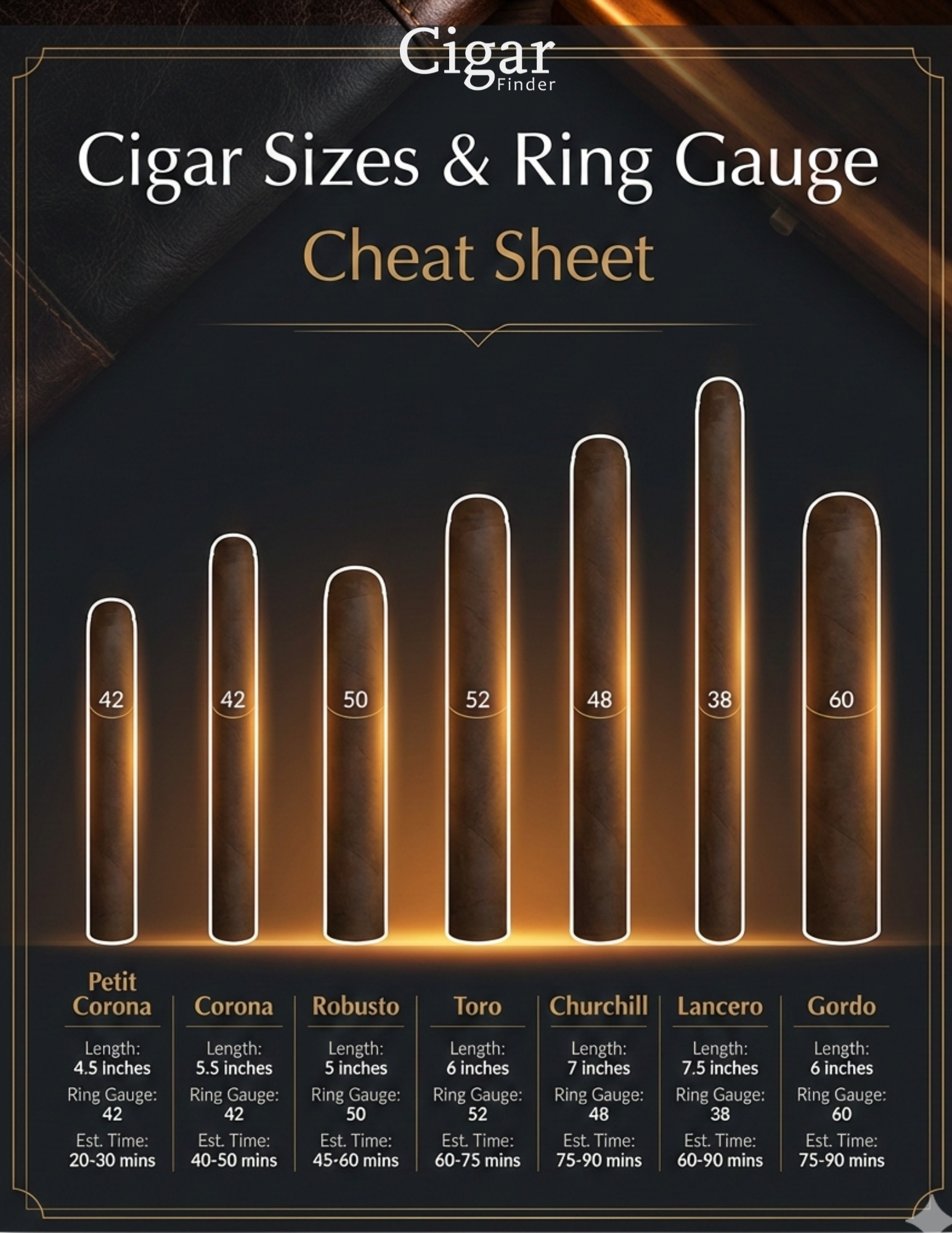
Quick answer: Cigar sizes are listed as length (inches) by ring gauge (diameter in 64ths of an inch). A 5x50 is a Robusto, the most popular size, smoking for 45 to 60 minutes. A 6x52 is a Toro (60 to 90 minutes). A 7x49 is a Churchill (90 to 120 minutes). The full chart and dimension lookup are below.
Cigar Sizes Chart (2026)
Use this as your quick reference. Each row covers a standard vitola, the typical dimensions you will see on the box, and what to expect when you light it.
*Actual time depends on how often you puff and how the cigar is constructed.
Common Cigar Dimensions Decoded
Searching for a specific size like 5x50 or 6.5x52? Here's what those numbers mean and what the cigar will smoke like.
| Dimensions |
Vitola name |
What you're holding |
| 4 x 32 |
Cigarillo / Petite |
Short, slim, casual smoke; common in machine-made flavors |
| 4 x 38 |
Petit Corona Extra |
Quick break, slim, wrapper-driven |
| 4 x 50 |
Petite Robusto |
Compact and full-bodied |
| 4.5 x 42 |
Petit Corona |
25 to 35 minute classic |
| 4.5 x 50 |
Short Robusto |
Robusto flavor, shorter time |
| 4.7 x 50 |
Robusto |
Industry standard 5x50 close cousin |
| 5 x 42 |
Corona |
Benchmark balanced cigar |
| 5 x 50 |
Robusto |
Most popular size in the world |
| 5 x 52 |
Robusto Extra |
Slightly thicker, cooler burn |
| 5.5 x 42 |
Corona |
Classic Cuban-style proportion |
| 5.5 x 52 |
Robusto Gordo |
Stout and full-flavored |
| 5.5 x 54 |
Corona Gorda Plus |
Big ring, medium length |
| 5.625 x 46 |
Corona Especial |
Slightly elongated corona |
| 6 x 50 |
Toro |
Most popular larger format |
| 6 x 52 |
Toro Extra |
Thicker toro, mellow |
| 6 x 54 |
Toro Gordo |
Big ring with more body |
| 6 x 60 |
Gordo |
Maximum cool burn, dense smoke |
| 6.25 x 52 |
Toro Grande |
Slightly longer toro |
| 6.5 x 42 |
Lonsdale |
Long slim wrapper-forward smoke |
| 6.5 x 48 |
Churchill (slim) |
Shorter churchill profile |
| 6.5 x 52 |
Toro Gordo |
Marathon mellow |
| 7 x 38 |
Lancero |
Slim and long, focused wrapper flavor |
| 7 x 49 |
Churchill |
Iconic long-session size |
| 7 x 50 |
Churchill Plus |
Slightly thicker churchill |
| 7 x 56 |
Double Toro |
Hefty long smoke |
| 7.5 x 38 |
Lancero Long |
Pure wrapper experience |
| 7.5 x 52 |
Double Corona |
Long and substantial |
| 8 x 52 |
Presidente |
Ceremonial size |
If your cigar isn't on this list exactly, find the closest dimensions and expect a similar experience. Brand to brand variation in nominal sizing is normal.
How Length and Ring Gauge Change the Smoke
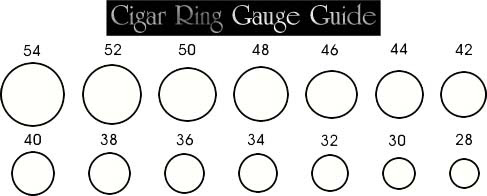
Cigars are measured two ways. Length is in inches. Ring gauge is the diameter expressed in 64ths of an inch, so a 50 ring gauge cigar is 50/64 of an inch wide. These aren't just spec-sheet numbers. They directly shape your experience.
- Ring gauge controls temperature and intensity. Thicker cigars burn cooler and slower, which produces a smoother, more rounded smoke. Slim cigars burn hotter and faster, concentrating the flavors and pushing the wrapper leaf forward.
- Length determines smoking time and flavor evolution. A 4 inch petit corona is a coffee-break smoke. A 7 inch churchill is a two-hour conversation. Longer cigars also evolve more, the first third often tastes different from the final third.
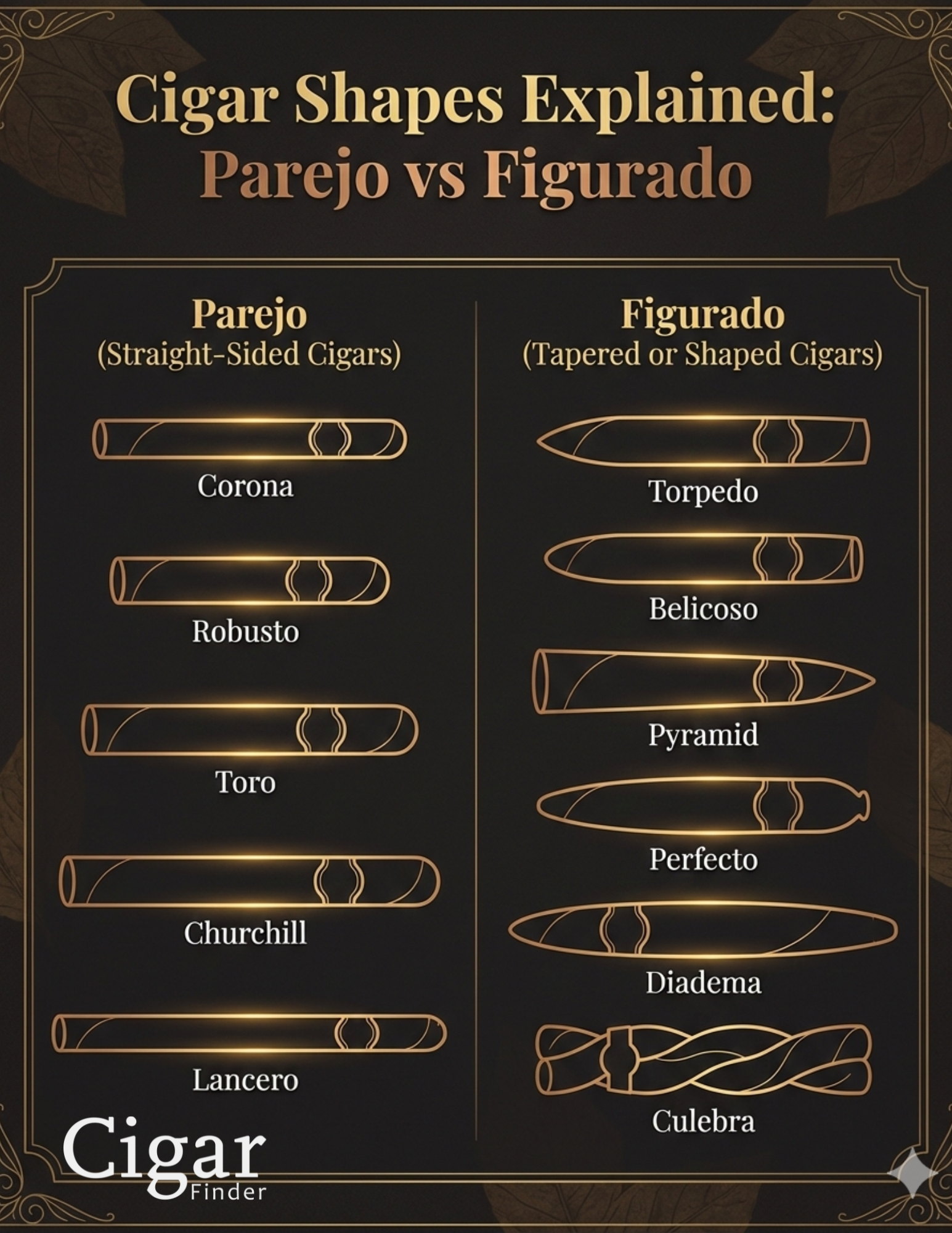
- Shape affects draw and flavor development. Straight-sided parejos give a consistent draw and even burn. Tapered figurados change diameter as you smoke, which intensifies or shifts the flavor.
The takeaway: a 5x50 isn't just a smaller version of a 6x60. They're different smokes that happen to use the same blend.
Ring Gauge Reference
A quick mental map for what to expect at each ring gauge:
- 30s to low 40s (Lancero, Panatela, Petit Corona) - Wrapper-forward, sharper, more intense flavor concentration
- 42 to 46 (Corona, Lonsdale) - Classic balance between filler and wrapper
- 48 to 52 (Robusto, Toro, Churchill) - Industry standard, balanced everything, easiest to enjoy
- 54 to 60+ (Gordo, Toro Gordo) - Coolest burn, often tastes milder despite the size, longer time
Despite what the marketing implies, a thicker cigar isn't automatically a stronger one. Strength comes from the blend.
Length Reference
What to plan for based on inches:
- 4 inches or less - 20 to 35 minutes, perfect for breaks
- 5 inches - 30 to 60 minutes, standard work-week smoke
- 6 inches - 45 to 90 minutes, full evening
- 7 inches or more - up to 2+ hours depending on ring gauge and pace
Pick the length that fits your time. Nothing ruins a great cigar like having to abandon it halfway through.
Cigar Shapes: Parejo vs Figurado
Cigars fall into two broad shape families.
Parejo (Straight-Sided)
Parejos are the cylinders most people picture when they think cigar.
Straight sides, an open foot, a rounded head. They make up the majority of what you'll find at any retailer.
The standard parejo vitolas are all in the chart above: Corona, Robusto, Toro, Churchill, Panatela, Lancero, Gordo. You'll also see box-pressed parejos, which have gently squared sides from being pressed in the box. Box-pressed cigars sit nicely in the hand and sometimes burn slower.
Figurado (Tapered or Irregular)
Anything with tapered ends or unusual curves is a figurado. The varying diameter changes how the cigar draws and how flavors develop. Common figurados:
- Torpedo - Straight body, sharply tapered head. The point lets you fine-tune your cut to control draw.
- Belicoso - Shorter, stubbier torpedo with a rounded tapered head.
- Pyramid - Broad at the foot, tapered to a point at the head. Flavors shift as the diameter narrows.
- Perfecto - Tapered at both ends, sometimes bulging in the middle. Starts with a small burn area that widens.
- Diadema - Oversized perfecto, often 8 inches or longer. Ceremonial.
- Culebra - Three slim cigars braided together, smoked individually after untwisting.
Figurados feel more dynamic because the smoke changes as you go. That doesn't make them better, just different. A perfectly made parejo can outsmoke a poorly made figurado any day.
Wrapper Colors and Flavor
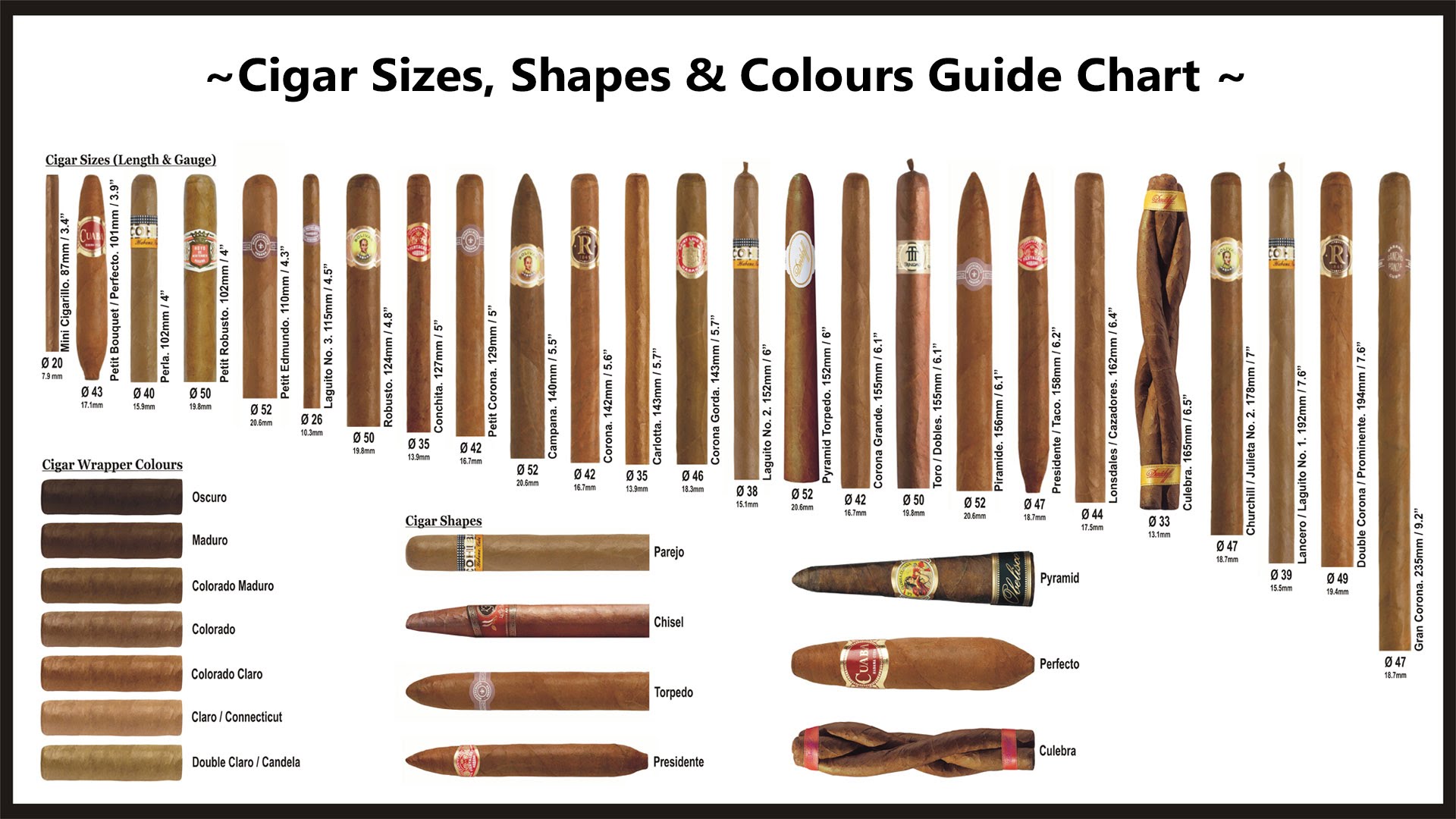
While length and ring gauge govern burn time and temperature, the wrapper leaf contributes a surprising amount of the flavor. Wrappers run from green to nearly black:
- Double Claro (Candela) - Light green, quick-dried to lock in chlorophyll. Grassy, slightly sweet.
- Claro - Pale tan, shade-grown, mild. Lets the filler dominate.
- Colorado Claro - Light reddish-brown. Sun-grown, slightly richer than Claro.
- Colorado - Medium brown to brownish-red. Balanced flavor and aroma.
- Colorado Maduro - Between Colorado and Maduro on the spectrum.
- Maduro - Deep reddish-brown to almost black. Long fermentation produces sweetness and full flavor.
- Oscuro - Nearly black. Extended fermentation. Heavy, earthy notes.
These shades aren't industry-standardized, every producer interprets them differently. The general rule: darker often means richer and sweeter, but don't assume darker means stronger. Strength is in the blend.
For a deeper read, see our understanding cigar wrappers guide.
Choosing the Right Size for You
There's no universal best
cigar size. The right one depends on three things:
- How much time do you have? 30 minutes? Petit Corona or short Robusto. Two hours on the porch? Toro or Churchill.
- How intense do you want the flavor? Slim cigars (Lanceros, Panatelas) concentrate the wrapper. Thick cigars (Gordos, Toro Gordos) burn cooler and often feel milder.
- What's the occasion? Quick coffee break gets a short smoke. Long conversation deserves a long cigar. New to the hobby? A sampler pack lets you try multiple sizes without committing to a box.
Most people land on two or three favorite sizes after a few months. A 5x50 robusto for weekdays, a 6x52 toro for weekends, a 7x49 churchill for special occasions, that's a typical rotation. Yours might end up totally different.
For specific picks at every price point, see our 9 best cigars for the money guide and the best cigars for beginners shortlist.
Storing Cigars at Any Size
Sizing matters less if your cigars aren't fresh. Quick rules:
- Store in a humidor or sealed container with a humidity control device
- Target 65 to 70 percent relative humidity
- Avoid temperature swings and direct sunlight
- Rotate periodically so none sit in a dry or wet corner
For the full storage breakdown, see our cigar storage guide.
Frequently Asked Questions
What is the most popular cigar size?
The Robusto, around 5 inches by 50 ring gauge. It hits the sweet spot of balanced flavor, manageable smoking time (45 to 60 minutes), and easy availability at every retailer.
What does 5x50 mean on a cigar?
It means 5 inches long with a 50 ring gauge (50/64 of an inch wide). This is the dimensional shorthand for a Robusto, the most popular cigar size in the world.
How long does each cigar size take to smoke?
A Petit Corona is 20 to 35 minutes. A Robusto is 45 to 60. A Toro is 60 to 90. A Churchill or Double Corona stretches to two hours or more. Your puff rate changes these by 10 to 15 percent in either direction.
What's the difference between a Toro and a Robusto?
A Toro is typically 6 inches by 50 ring gauge. A Robusto is 5 inches by 50. Same diameter, different lengths. The Toro gives you about 20 more minutes and lets the blend evolve further.
Does a bigger cigar mean a stronger cigar?
No. Strength comes from the tobacco blend, not the size. Thick cigars usually burn cooler and feel milder. Slim cigars burn hotter and can taste more intense even when the underlying blend is mild.
What is a Figurado?
Any cigar with an irregular shape. Torpedos, Belicosos, Pyramids, Perfectos, and Diademas are all figurados. They're harder to roll than straight parejos, so they're often premium.
What's the best cigar size for beginners?
A 5x50 Robusto. It's balanced, doesn't lock you into a long session, and every retailer carries one in dozens of blends. A Corona (5x42) is also a solid first choice if you want something a bit slimmer.
Is it okay to cut a long cigar in half?
No. Cutting a cigar in half ruins the construction and the draw. If you want a shorter smoke, buy a shorter vitola.
What ring gauge is best?
Depends on what you want. 50 to 52 is the safest middle ground, what most premium cigars use. 38 to 42 emphasizes the wrapper. 58 to 60 burns cooler and lasts longer. There's no objective best.
Join the Deal-Hunting Community!
Share your cigar deals and steals with fellow enthusiasts:
- Cigar Deals & Steals Facebook Group
- Cigar Deals X Community
- r/EverythingCigars Deals & Steals
Explore More: Now that you know your sizes, browse premium cigars and filter by shape and ring gauge. For variety try a sampler pack. Learn how wrappers change flavor, how to pair cigars with drinks, and how to smoke a cigar. New to cigars? Start with our beginner's guide.