




Last updated: March 2026
Walk into any cigar shop or browse any online retailer and you will see numbers attached to cigars: 90, 92, 95. These ratings influence what ends up on store shelves, what sells out first, and what many smokers reach for when they want a guaranteed good experience.
But how do these ratings actually work? Who assigns them? And should you trust them when deciding what to smoke? This guide breaks down everything you need to know about cigar ratings, from the scoring systems used by major publications to the controversies that surround them.
What Are Cigar Ratings?
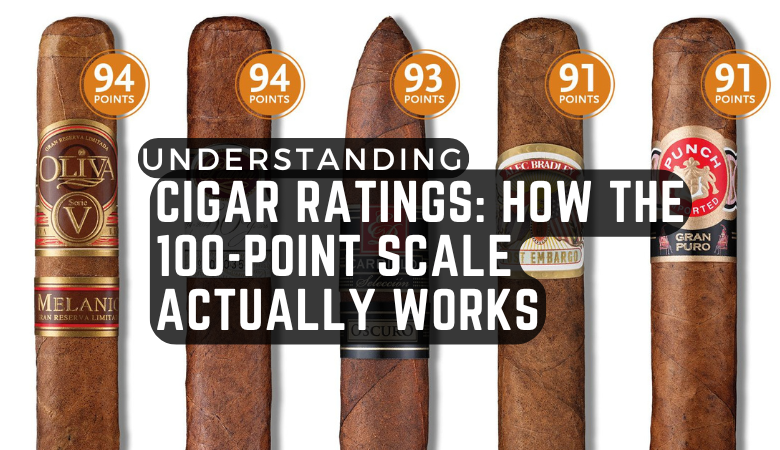
Cigar ratings are scores assigned to individual cigars by reviewers, publications, and media outlets. Nearly all cigar ratings use a 100-point scale, similar to the system used for wine and spirits. The higher the score, the better the cigar performed during the review.
Ratings evaluate a combination of factors including appearance, construction, draw, burn consistency, flavor complexity, and overall smoking experience. The idea is to give smokers a standardized way to compare cigars and make informed buying decisions.
The practice became widespread in the 1990s when Marvin Shanken, the publisher of Wine Spectator, launched Cigar Aficionado magazine and applied the same 100-point rating system that had already transformed the wine industry. Today, several publications and websites rate cigars, each with their own methodology.
The 100-Point Scale Explained
While the scale technically runs from 0 to 100, you will almost never see a premium cigar score below 70. Most handmade cigars from established brands fall somewhere between 80 and 95. Here is what each range generally means:
95 to 100: Classic / Exceptional
These are the rarest scores. A cigar in this range delivers a virtually flawless smoking experience with outstanding complexity, perfect construction, and a flavor profile that evolves beautifully from start to finish. Only a handful of cigars earn these scores each year.
Examples of cigars that have scored 95+: * Padron 1926 Serie No. 9 (97 points, Cigar Aficionado) * My Father Le Bijou 1922 Torpedo (97 points, Cigar Aficionado) * Oliva Serie V Melanio (96 points, Cigar Aficionado)
90 to 94: Outstanding
This is where most great
cigars land. A 90+ rated cigar is considered excellent by any standard, with strong flavor, good construction, and a satisfying overall experience. The 90-point threshold is the benchmark that retailers and consumers pay the most attention to.
When Cigar Aficionado releases its annual Top 25 list each December, only cigars that scored 91 or higher during the year's blind tastings are eligible for consideration.
85 to 89: Very Good
Cigars in this range are solid, enjoyable smokes but may have minor shortcomings. Perhaps the flavor is good but lacks complexity, or the construction is slightly uneven. Many everyday smoking cigars fall in this range, and an 88 or 89 from a tough publication can still represent an excellent cigar.
80 to 84: Good
These cigars are acceptable but unremarkable. They may have noticeable flaws in construction, draw, or flavor consistency. Most experienced smokers would not seek these out, but they are not bad cigars.
Below 80: Below Average
Scores under 80 are uncommon for premium handmade cigars and typically indicate significant construction problems, harsh or unpleasant flavors, or fundamental quality issues. You are unlikely to encounter these scores on cigars from established brands.
How Major Publications Rate Cigars
One of the most important things to understand about cigar ratings is that different publications use different methods. A 92 from one source does not necessarily mean the same thing as a 92 from another.
Cigar Aficionado
Cigar Aficionado is the most influential cigar publication in the world. Their ratings carry enormous weight with both retailers and consumers.
Method: Blind tasting by a panel. All cigar bands are removed before the tasting, so reviewers do not know what brand or blend they are smoking. This is designed to eliminate brand bias.
Criteria: Appearance, smoking performance (draw and burn), flavor, and overall impression.
Scale interpretation: 95-100 = Classic, 90-94 = Outstanding, 80-89 = Very Good to Excellent, 70-79 = Average to Good, Below 70 = Don't Waste Your Money.
Key detail: Each December, Cigar Aficionado releases its Top 25 Cigars of the Year list, which is the most anticipated ranking in the cigar world. Cigars on this list are limited to those that scored 91+ during the year's tastings. The #1 Cigar of the Year announcement drives massive sales spikes and can sell out retailers within days.
Halfwheel
Halfwheel is one of the most respected independent cigar review sites. They take a very different approach from Cigar Aficionado.
Method: Single reviewer (not a panel), and reviews are NOT blind. The reviewer knows what they are smoking. Each cigar is smoked multiple times (typically three) before a final score is published.
Scale interpretation: Halfwheel considers 88+ to be box-worthy,
meaning the reviewer recommends buying a full box. They tend to be more conservative with scores than some other publications, so a Halfwheel 90 may carry more weight than a 90 from a more generous source.
Key detail: Because Halfwheel reviews are not blind, they are transparent about the potential for brand influence. However, their multi-smoke methodology provides a more thorough assessment of consistency, which is something a single blind tasting cannot capture.
Cigar Dojo
Cigar Dojo uses a percentage-based scoring system (0-100%) and breaks down scores into specific subcategories like appearance, draw, flavor, and overall experience. This gives readers more granular detail about where a cigar excels or falls short.
Cigar Coop
Cigar Coop uses the 100-point scale and includes an explicit value
recommendation alongside each score, telling readers whether the cigar is worth buying at its price point. This added context can be especially helpful for smokers shopping on a budget.
Blind Man's Puff
As the name suggests, Blind Man's Puff follows a strict blind review protocol. Like Cigar Aficionado, reviewers smoke cigars without knowing what they are. However, they are an independent site without the same advertising relationships as major magazines.
What Ratings Actually Measure
When a reviewer scores a cigar, they are evaluating several specific aspects:
Appearance and Construction: Does the wrapper look healthy, smooth, and well-applied? Is the cigar firm and consistent when squeezed? Is the cap well-constructed? While appearance alone does not make a cigar great, visible flaws often signal problems that show up during smoking.
Draw: How easily does air pass through the cigar? A good draw should feel like sipping through a straw with light resistance. Too tight and the smoker has to work too hard. Too loose and the cigar burns hot with muted flavors.
Burn: Does the cigar burn evenly? An uneven burn line that requires frequent touch-ups indicates construction problems. A well-made cigar should burn straight with minimal correction needed.
Flavor: This is the most heavily weighted factor in most rating systems. Reviewers assess the depth, complexity, balance, and evolution of flavors throughout the cigar. A high-scoring cigar will change and develop as you smoke through it, with distinct flavor transitions between the first, second, and final thirds.
Overall Experience: This is where subjectivity plays the biggest role. How did the cigar make the reviewer feel? Was it memorable? Would they smoke it again? Did it deliver on the expectations set by its price and brand reputation?
For tips on learning to identify these qualities in your own smoking, read our guide on developing a taste for cigars.
The Controversies Around Cigar Ratings
No discussion of cigar ratings is complete without addressing their limitations. Ratings are useful tools, but they come with real caveats that every smoker should understand.
Subjectivity Is Built In
Taste is personal. A cigar that one reviewer scores 95 might taste like an 88 to you, and that does not mean either of you is wrong. Your palate, your mood, what you ate before smoking, the time of day, and even the humidity in the air all affect how a cigar tastes. Ratings reflect one person's (or one panel's) experience on one particular day.
Panel Members Smoke A Lot
At major publications, tasting panel members may smoke 6 to 12 cigars per day during rating sessions. By the third or fourth cigar, their palates are fatigued. This can create a bias toward full-bodied, bold cigars that can punch through palate fatigue. Mild and medium-bodied cigars, which rely on subtlety and nuance, may score lower simply because the reviewer's palate was too tired to appreciate them.
This means the rating system can inadvertently undervalue mild and medium cigars that many everyday smokers actually prefer. If you enjoy smoother, lighter cigars, do not assume a lower score means a worse cigar for you.
Reviewers Rarely Smoke the Entire Cigar
Time constraints mean that some reviewers do not smoke every cigar to the nub. Some reportedly smoke only the first few inches before assigning a score. This is a real limitation because many premium cigars are specifically blended to evolve through three distinct stages, and the final third is often where the most interesting flavors emerge. A cigar judged only on its first third may receive a score that does not reflect the full experience.
Advertising and Access
Some industry insiders have raised questions about whether advertising relationships influence ratings. While most major publications maintain editorial independence, the concern exists because cigar brands that advertise heavily in a publication may receive more favorable coverage or more frequent reviews. This is worth keeping in mind when evaluating ratings from any source.
Single Cigar vs. Consistency
A rating reflects one cigar (or a small sample). But premium cigars are natural products with inherent variation. A box of the same cigar can include sticks that smoke very differently from each other. A single review cannot capture this inconsistency. Halfwheel's multi-smoke methodology partially addresses this, but most publications rate based on a single sample.
How to Use Ratings as a Buying Tool
Despite their limitations, cigar ratings are genuinely useful if you know how to use them properly:
Use ratings as a starting point, not a final answer. If a cigar scores 92+ from multiple sources, it is very likely a well-constructed, flavorful smoke. But it still may not match your personal taste.
Find a reviewer whose palate matches yours. Smoke a few highly rated cigars and compare your experience to the reviewer's notes. If you consistently agree with a particular source, their future ratings will be more reliable for you.
Look at multiple sources. A cigar that scores 92 from Cigar Aficionado AND 91 from Halfwheel AND 93 from Cigar Coop is almost certainly excellent. Consensus across publications is a stronger signal than any single rating.
Do not dismiss lower-rated cigars. An 87 or 88 can be a perfectly enjoyable cigar, especially if it hits your flavor preferences. Many of the best cigars for the money are not the highest-rated cigars, but they deliver outstanding value at their price point.
Remember that ratings favor bold profiles. If you prefer mild or medium-bodied cigars, seek out reviewers who specifically appreciate those profiles, or focus on ratings from publications that review cigars individually rather than in rapid panel tastings.
Use CigarFinder alongside ratings. Once you have identified a highly rated cigar you want to try, compare prices across 20 retailers to make sure you are getting the best deal. And check our coupon codes page before buying.
Notable Cigar of the Year Winners (2014-2025)
For reference, here are the cigars that earned the #1 Cigar of the Year from Cigar Aficionado over the past decade:
- 2014: Oliva Serie V Melanio Figurado
- 2015: My Father Le Bijou 1922 Torpedo Box Pressed
- 2016: La Flor Dominicana Andalusian Bull
- 2017: Arturo Fuente Don Carlos Eye of the Shark
- 2018: E.P. Carrillo Encore Majestic
- 2019: Aging Room Quattro Nicaragua Maestro
- 2020: E.P. Carrillo Pledge Prequel
- 2021: Padron 1964 Anniversary Series Torpedo
- 2022: H. Upmann No. 2 (Cuban)
- 2023: Arturo Fuente OpusX Reserva d'Chateau
Many of these cigars are available on CigarFinder. Search and compare prices to find the best deals.
Frequently Asked Questions
What is a good cigar rating? Generally, 90+ is considered excellent and is the benchmark most smokers look for. However, cigars rated 85-89 can be very enjoyable smokes, and an 88 from a conservative publication like Halfwheel is a strong recommendation.
Are cigar ratings reliable? They are useful but not definitive. Ratings reflect one reviewer's experience and are influenced by factors like palate fatigue, personal preference, and methodology. Use them as a guide alongside your own smoking experience, not as the sole basis for buying decisions.
Why do different publications give different scores to the same cigar? Methodology varies. Cigar Aficionado uses blind panel tastings, Halfwheel uses single non-blind reviewers who smoke each cigar multiple times, and other publications have their own approaches. Different palates, different conditions, and different rating philosophies all contribute to variation.
Do ratings favor certain types of cigars? Yes. Panel-based tastings tend to favor bold, full-bodied cigars because reviewers who smoke many cigars per day need intense flavors to register. Mild and medium-bodied cigars may score lower in these settings despite being excellent smokes. If you prefer lighter cigars, check out our best cigars for beginners for curated mild picks.
Should I only buy 90+ rated cigars? No. Many outstanding everyday cigars score in the high 80s and represent excellent value. The best cigars under $5 and best cigars under $10 include plenty of 85-89 rated smokes that deliver more enjoyment per dollar than many 95-rated premium sticks.
What is the highest-rated cigar ever? Cigar Aficionado has given 97-point scores to a handful of cigars, including the Padron 1926 Serie No. 9 and the My Father Le Bijou 1922 Torpedo. True 98-100 scores are essentially nonexistent in their rating history.
How do I develop my own palate for rating cigars? Start by paying attention to the three thirds of each cigar: how the flavor changes from the beginning to the middle to the end. Take notes on what you taste and what you enjoy. Over time, you will develop your own internal rating system that is far more useful to you than any publication's score. Our guide on developing a taste for cigars walks through this process step by step.
Explore More on CigarFinder
- Best Cigars of 2026
- Game-Changing Cigar Brands of the Decade
- Best Cigars for the Money
- How to Choose a Cigar
- What Is Considered a Premium Cigar?
- Developing a Taste for Cigars
- Best Cigars for Beginners
- Best Cigars Under $5
- Best Cigars Under $10
- Browse All Brands
- Browse Premium Cigars
- Compare Prices on CigarFinder
- Coupon Codes & Deals

